Shipshewana, Indiana
Our History
Shipshewana has a story that is older than this building, and it does not begin with anyone named Davis.
Before 1891
The Name on the Sign
Before there was a Davis Mercantile, before there was a Davistown, this was Potawatomi land.
The Potawatomi were the Keepers of the Sacred Fire. They lived across what is now northern Indiana and southern Michigan, and they had been here a very long time before anyone drew a county line through it.
In 1830, Congress passed the Indian Removal Act. Three years later, the Treaty of Chicago took the last of the Potawatomi land in this region and gave them a deadline to leave it. Most did not want to go. Many stayed anyway, on land that had stopped being theirs on paper.
On September 4, 1838, they were forced out at gunpoint and marched west toward Kansas. More than forty people died on the way. It is remembered as the Trail of Death, and that is the right name for it.
The memorial south of the lake puts it more gently than that. It says they were removed, and escorted to Kansas by a company of soldiers. It also says that the Chief came home heartbroken, and that is the truest word on it.
Chief Shipshewana was among those taken. In 1839 he was granted permission to come back. He made the trip home and lived here until he died in 1841, on his own ground.
His name, Shup-she-wah-no, is given on the memorial as meaning a vision of a lion.
Chief Shipshewana was remembered here. The people who settled this county in those years knew him, and the ones who wrote it down said he had befriended them. Hezekiah Davis was a boy of ten when his family arrived in 1836, so whatever he understood of the Chief, he understood it as a child.
Years later, when the town he had built needed a name on the plat and the obvious choice was Davistown, it was his wife Sarah who said it should be Shipshewana instead. That was January of 1889.
That is a decent thing to have done. It is not a happy ending. A town named in someone’s honor is a small thing set against a government that marched him and his people off their land and killed more than forty of them doing it. Both things are true, and this page is not going to pick the comfortable one and leave the other out.
The Chief’s memorial stands south of Shipshewana Lake. In 2003, Rebecca Haarer made the Blessing Quilt that hangs in the Shipshewana Town Hall, working Potawatomi beadwork into the design. A Potawatomi visitor brought his granddaughters to see it. They recognized the patterns immediately. What they said was: “There’s our beads and our Ring of Fire!”
Norm Kauffman, who has spent years on the local history, put the standard plainly.
“It would really be great if we had an honest history told.”
We agree. That is why this is the first thing on the page instead of the last.
1891 to 1989
The Hotel by the Depot
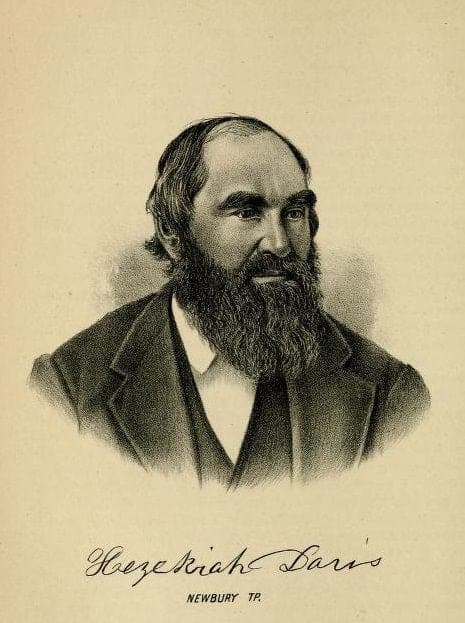
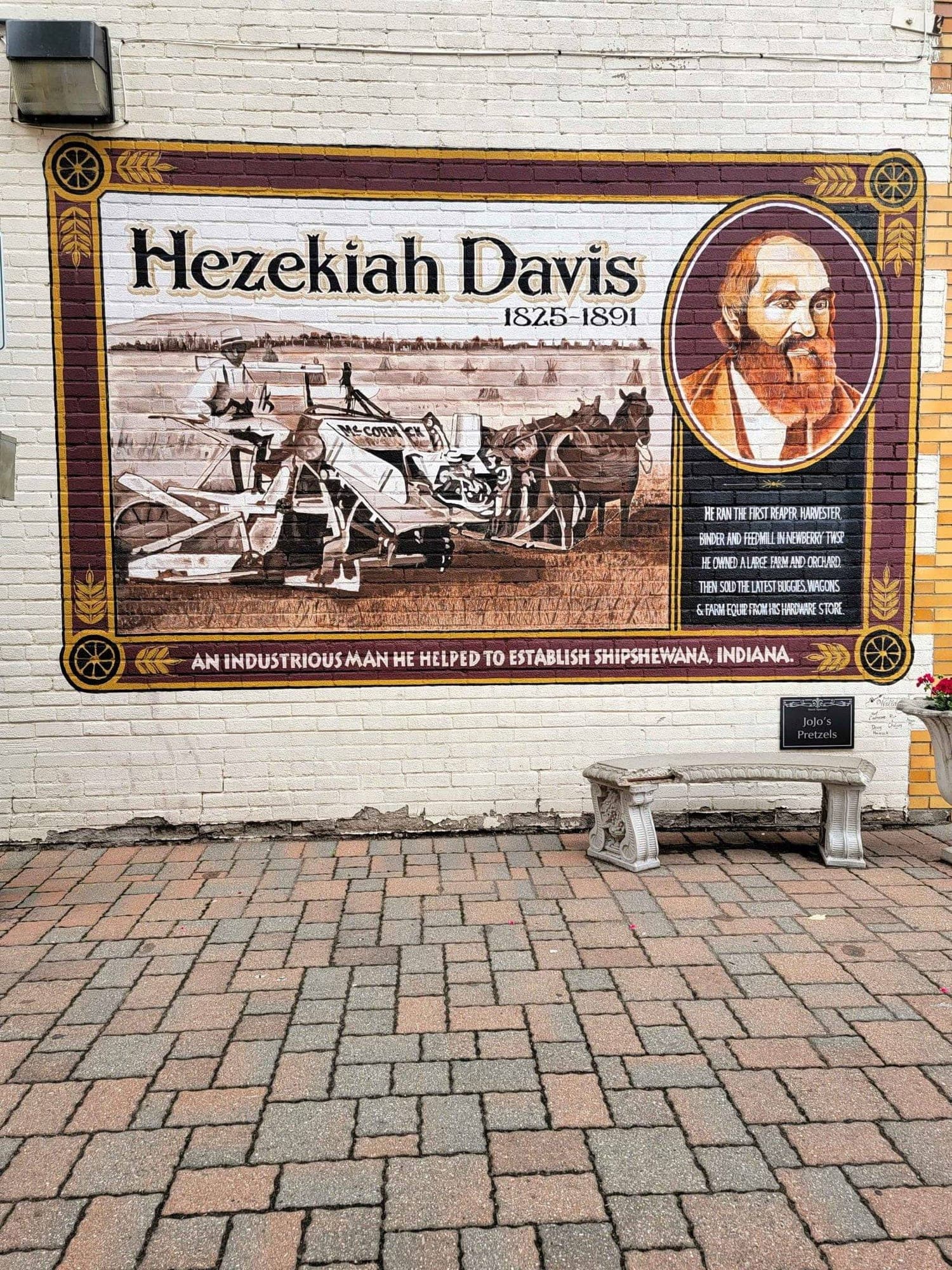
Hezekiah Davis came here with his family in 1836, when he was ten. By the time he was grown he had put together more than fourteen hundred acres east of what is now State Road 5.
He decided the place needed a town, and he understood that a town needs a way for people to reach it. So he paid ten thousand dollars of his own money to bring the railroad through, and in 1888 it came. Then he built two large brick buildings on opposite corners of Main and Morton, facing the depot, and the businesses came to him.
In 1891 he added a hotel beside the tracks, for the people getting off them. He died that same year.
Davistown and Summeytown
There was another man. Abraham Summey came in 1851 and by 1866 he held more than five hundred acres on the west side of the same road. While Hezekiah was building Davistown, Summey was building Summeytown, and the two of them went at it for years. The plaque the families put up in 2000 describes animosity, and suspected retaliation on both sides.
It ended the way these things sometimes do. Eugene Davis and Alice Summey fell in love and married, and after that the two halves of the town stopped fighting each other.
In January of 1889 Davistown was platted as Shipshewana. That fall, Summeytown became the First Summey Addition to Shipshewana.
Which is worth sitting with for a second. Two men spent the better part of their lives competing to put their own name on this place, and in the end the town is named after neither of them. It is named after a man they took the land from.
The years in between
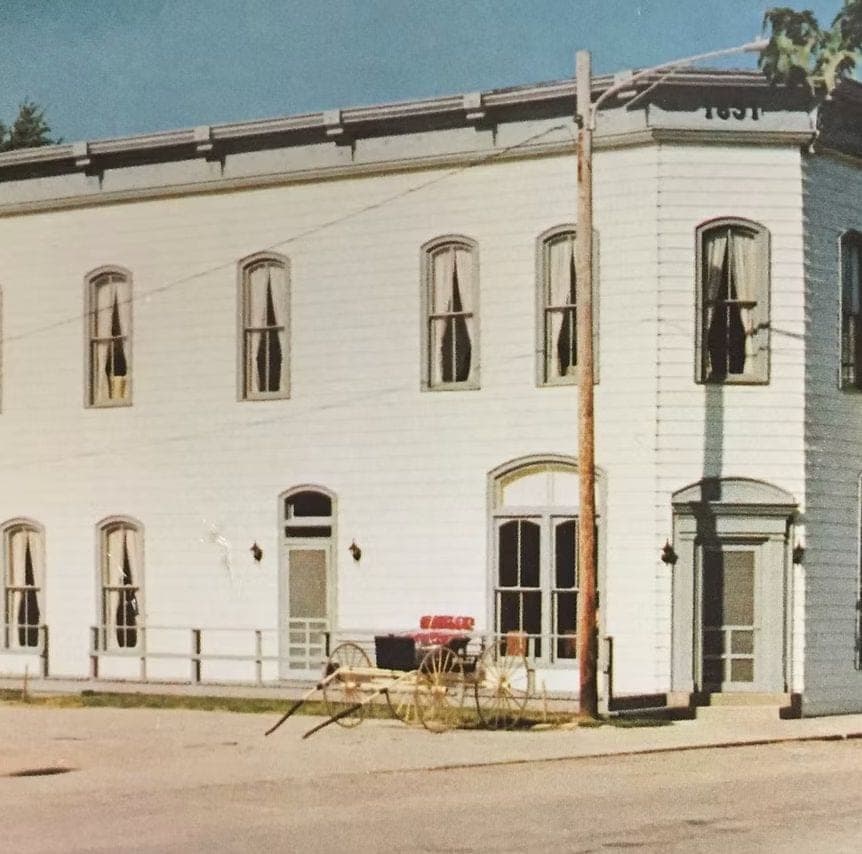
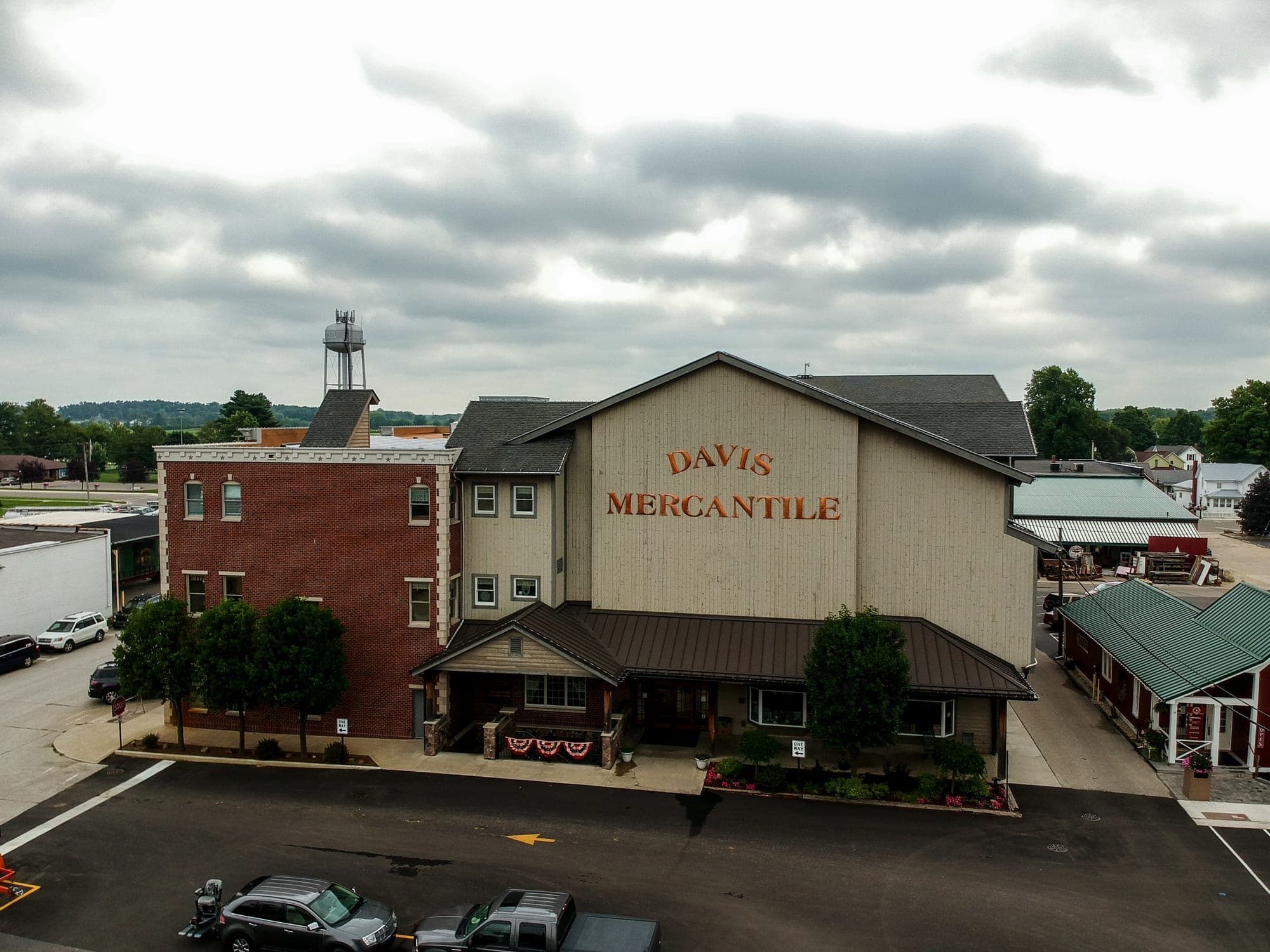
The hotel sat at the corner of Main and Morton for about seventy years. In the 1960s it was moved, the whole building, to where the Mercantile stands today. The entire town turned out to watch it happen. That is the kind of thing you only get to see once.
In the century between, the building did a lot of jobs it was not built for. By the 1920s the only thing still operating inside it was a barbershop. After that it held grain. At one point it was a chicken hatchery. When it was moved in the 1960s, the brick veneer came off first and only the frame went up the street.
The Millers
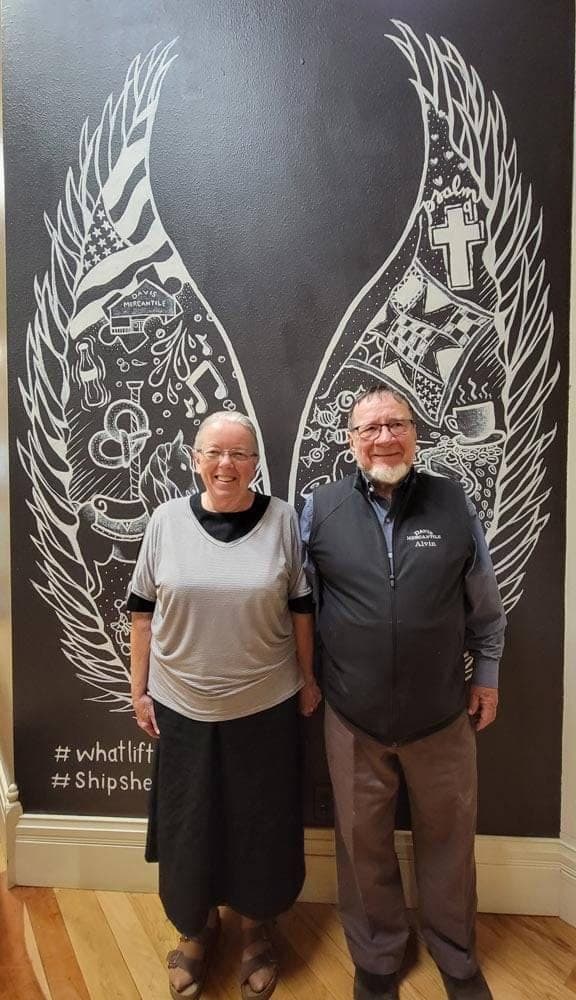
By the early 1980s nobody was sure the building had a future. Alvin thought Shipshewana could be somewhere people drove to on purpose. In his own words, no one else could see it. So he drove to Middlebury and Topeka and the other towns nearby and counted cars and buggies, to work out which towns were busy and when.
In 1982, Alvin and Elsie Miller bought it.
This is the part people get wrong, so it is worth saying plainly. The Davis family built the hotel. The Miller family has owned and run this building since 1982. The name on the sign stayed because the history is worth keeping, not because the family changed.
Alvin and Elsie fixed the old place up and put six guest rooms back in service. For a while those six rooms were the only lodging in Shipshewana. They added a big porch, and the rocking chairs on it became the standard arrangement: husbands out front, wives inside shopping, everybody satisfied.
Then the hotel ran out of room for what they had in mind. In 1989 the Davis Mercantile was built alongside it, and a lot of new shopkeepers moved in. That same year, Levi and Joanna King started selling pretzels inside the building from a recipe out of their Amish family kitchen. Levi named it for Joanna before the two of them were even married. Two years after that, in 1991, they opened Kitchen Cupboard.
The building grew the way old buildings do, by absorbing its neighbors. Six connected structures, floors that did not quite line up with each other, and people came from across the country to walk through it.
The fire
February 28, 2004
It was a Saturday.
The fire took the entire block. The Old Davis Hotel, built in 1891. The Mercantile, built in 1989. The four other buildings that had been joined to them over the years. Eleven shops. The cause was officially declared undetermined, and it has stayed that way.
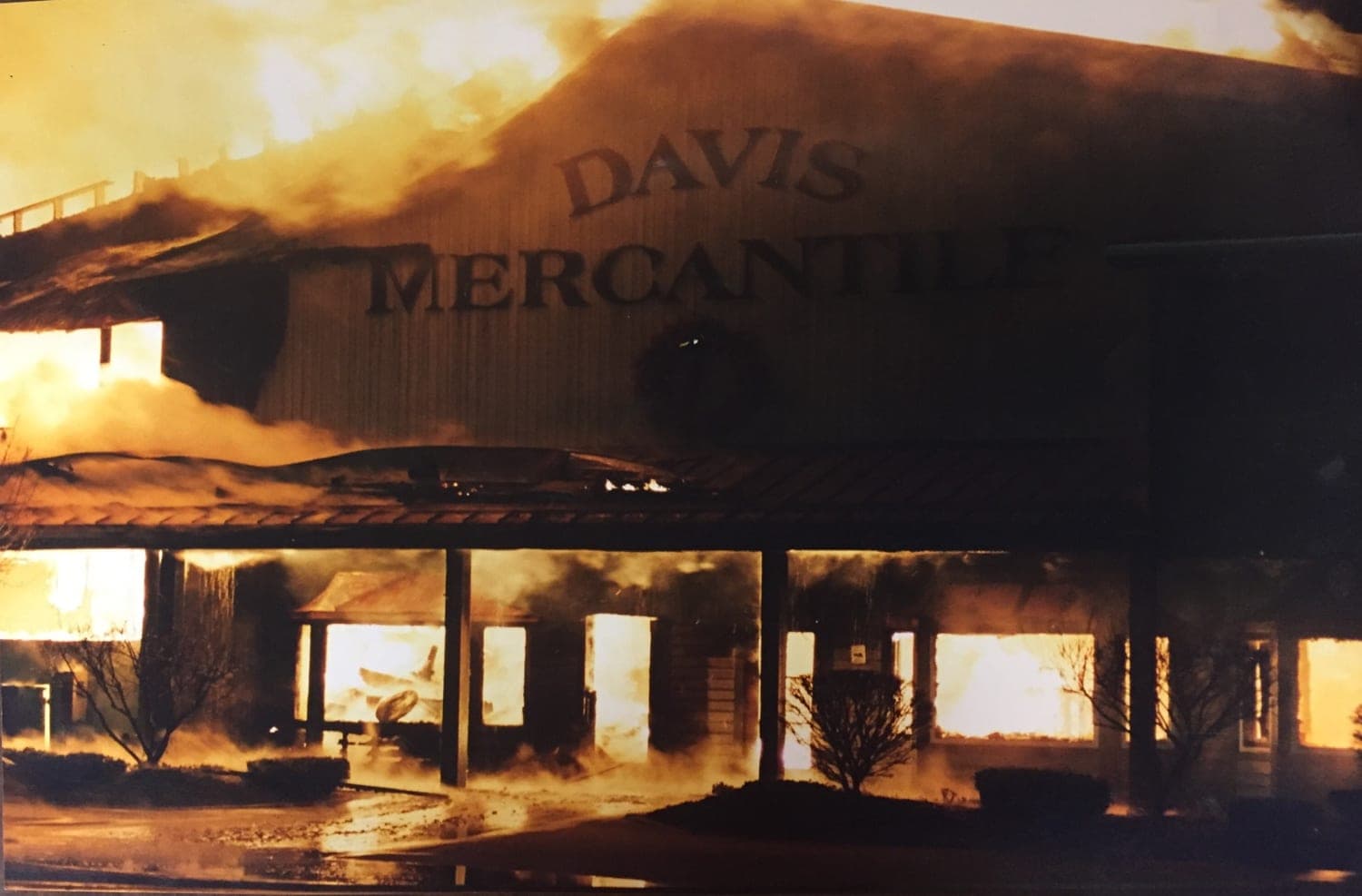
When the family wrote to their customers afterward, they listed what people were writing in to mourn, and the list says more than any description of a fire could:
The pretzels. The fabrics. The quilts. The books. The dulcimers. The toys. The candles. The ladies’ apparel. The coffee breaks.
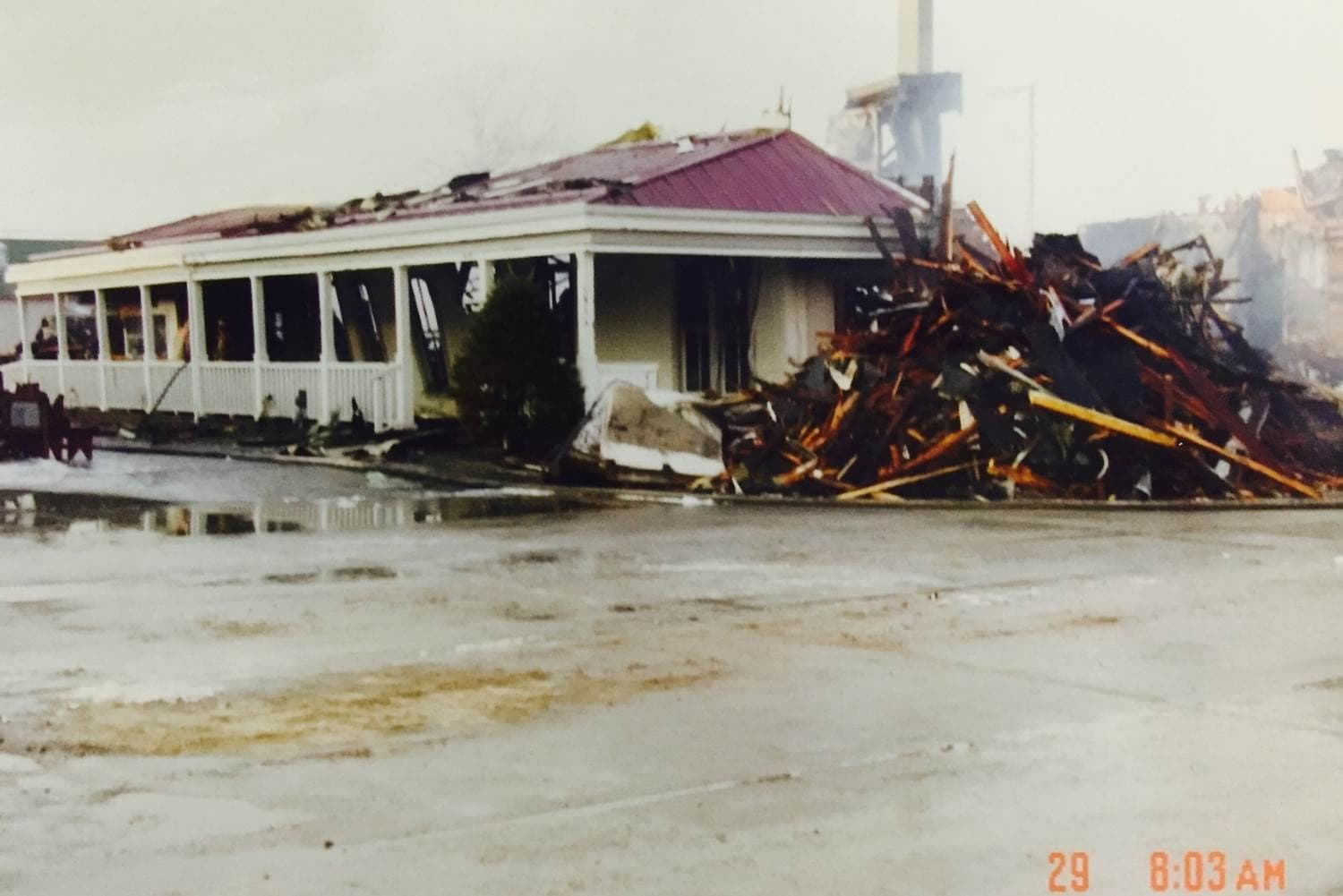
The letters came from all over. Some of them came from Switzerland and New Zealand. What Alvin took from that was that a lot of people had quietly taken ownership of this building over the years. To many of them, they had not lost a place they liked to visit. They had lost their stores.
For two weeks the family was not allowed on the property. Alvin came anyway and walked the perimeter of the fence. Almost nothing had survived, except that where Lolly’s had been there was still fabric lying in the ash.
One day he found a woman with her arm pushed under the chain link, scooping ashes and scorched cloth into a jar.
She told him she just wanted a little bit of Lolly’s.
That Monday, two days after the fire, Alvin found out he had cancer.
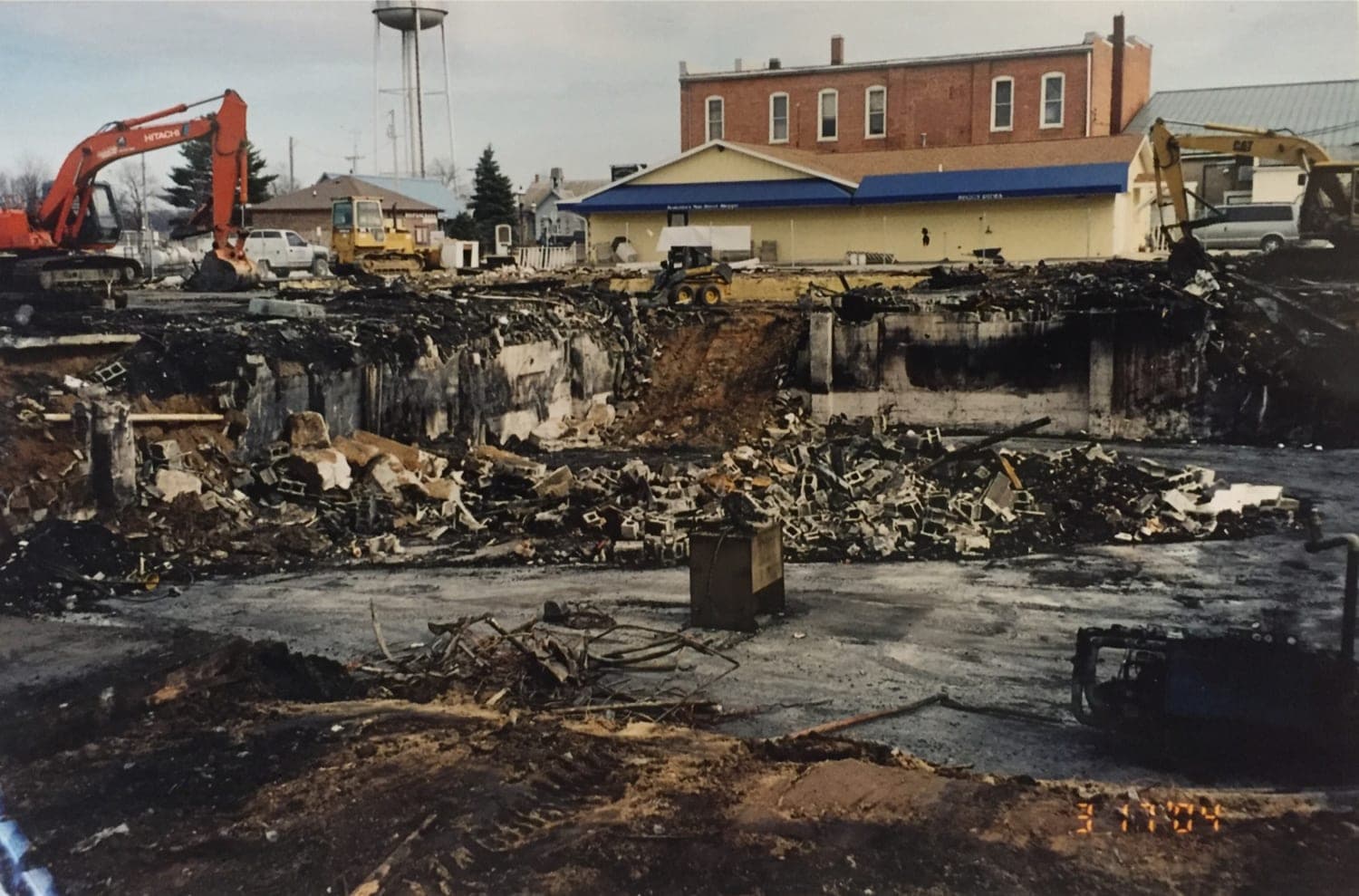
“When you've got a big hole in the ground and you've got cancer, you don't want to think about cancer all the time, and you don't want to think about the hole all the time.”
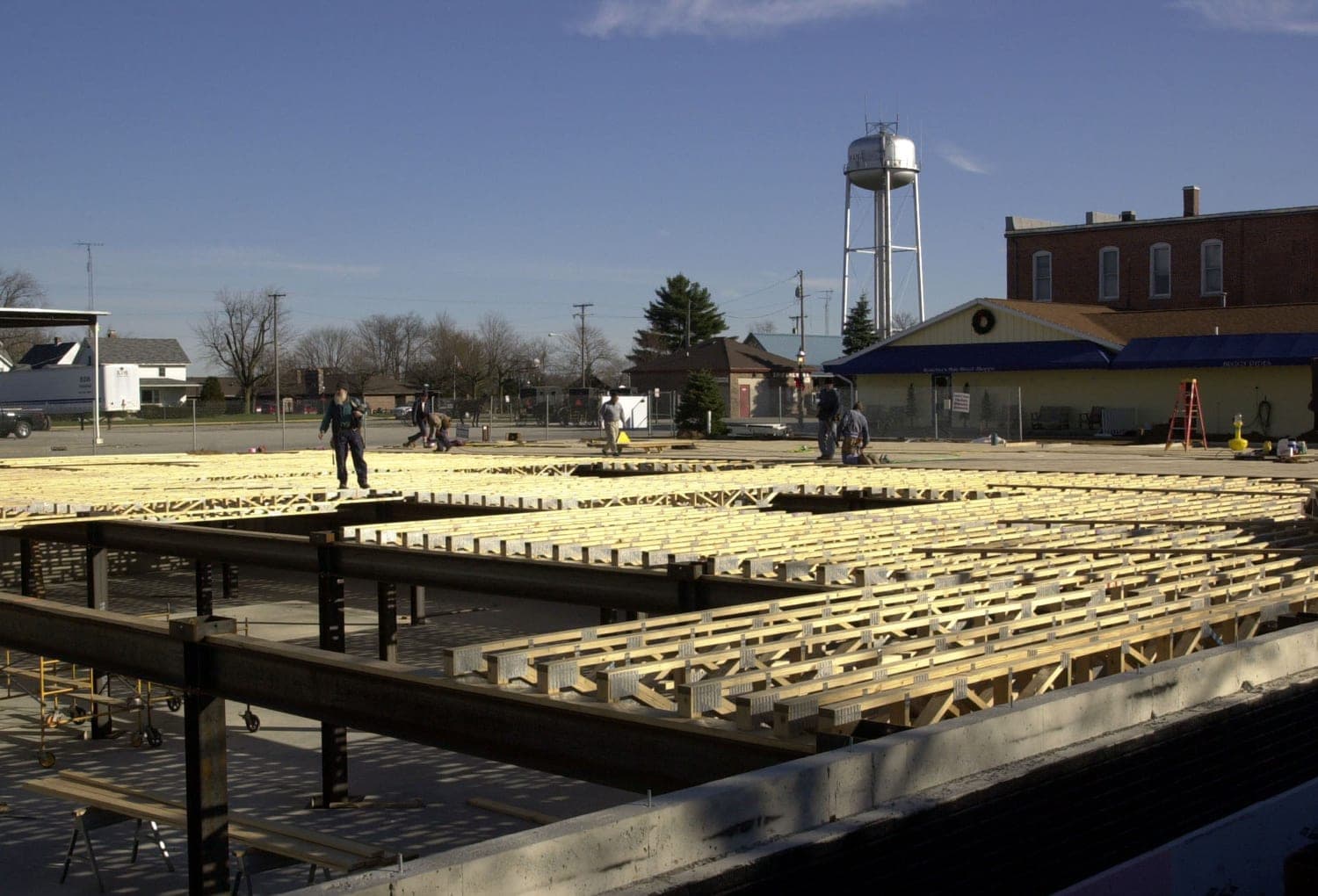
That fall, the Amish community came and helped raise the new building in an Old Fashioned Barn Raising. So many people turned up that the family had trouble finding work for all of them. Not a metaphor. An actual barn raising, with neighbors, on the same ground.
Alvin came through the cancer and was given a clean bill of health. Kitchen Cupboard reopened in the new building in 2006.
2004 to today
What It Is Now
When the family sat down to plan the new building, they were not only replacing what burned. They were deciding what should be here instead.
Alvin Miller was an independent project engineer, and before that he owned a sawmill. That is worth knowing before you look at the building, because it explains most of what you are looking at. The beams are not hidden behind drywall. The staircase is tulip poplar, cherry, beech, and maple, all of it native hardwood, and Alvin drew it himself. And when the family had to decide what went in the middle of a building they were putting back up from nothing, a man who had spent his working life around timber put a tree in it.
Elsie’s carousel
Elsie suggested a carousel on the third floor.
Alvin and Elsie have twenty three grandchildren, and the grandchildren were part of the planning. Elsie wanted a carousel. One of the grandchildren held out for a slide running from the third floor down to the lower level, and Elsie turned it down for a reason that says a lot about how this family thinks about a building: a slide would separate children from their parents.
They found the frameworks abandoned in a barn. As Elsie put it, they were bedded down just like you would bed down cattle. The carousel is a 1906 Dentzel. The original working parts are still doing the work: the gears, the braces, the center pole. Everything you can see was carved new for this building, and the animals are the ones you actually see around here. Horses. Cows. Chickens. Dogs. If you are lucky when it comes around, a team of work horses turning soil for a farmer.
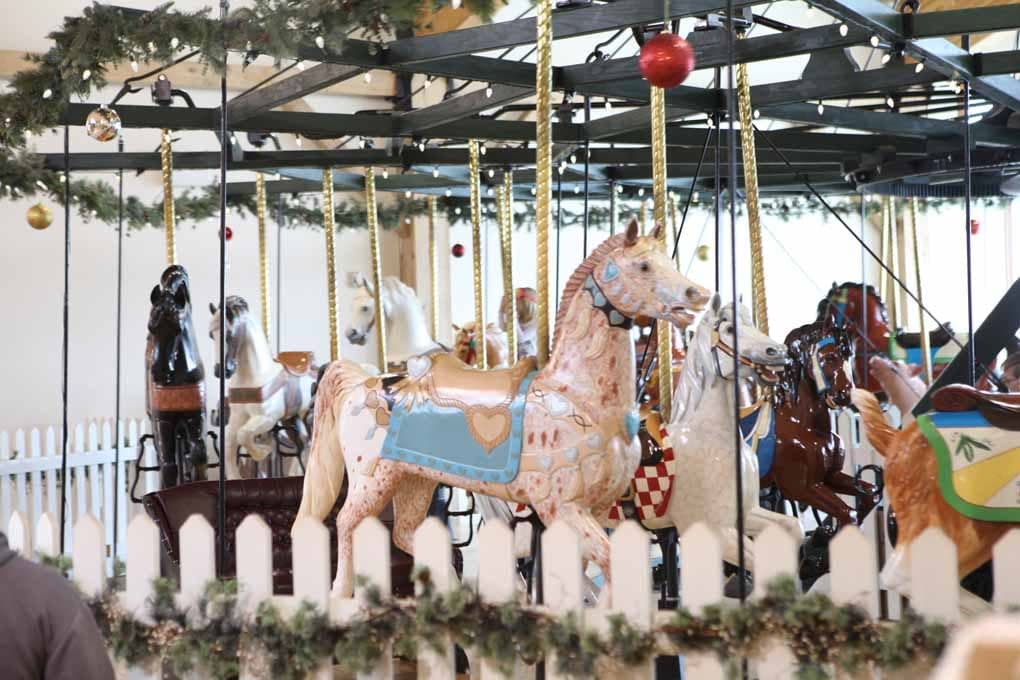
Al Bontrager carved them. He learned to carve as a young Amish boy, watching his grandfather. Cheryl Kellett painted them.
The gears and the working parts are left open where you can see them. The benches are buggy seats.
The tree
In December of 2004, on a very cold day, a semi trailer pulled up with a delivery. It came with a packing list. The packing list said, in full: large log.
It was fifty six feet long, forty four inches across, and eighteen thousand pounds. Somebody counted the growth rings when it arrived and came out at three hundred and seventy years. That tree was already growing before the pilgrims landed at Plymouth Rock. It was a grand daddy during the Civil War. Most trees in Indiana are lucky to see a hundred.
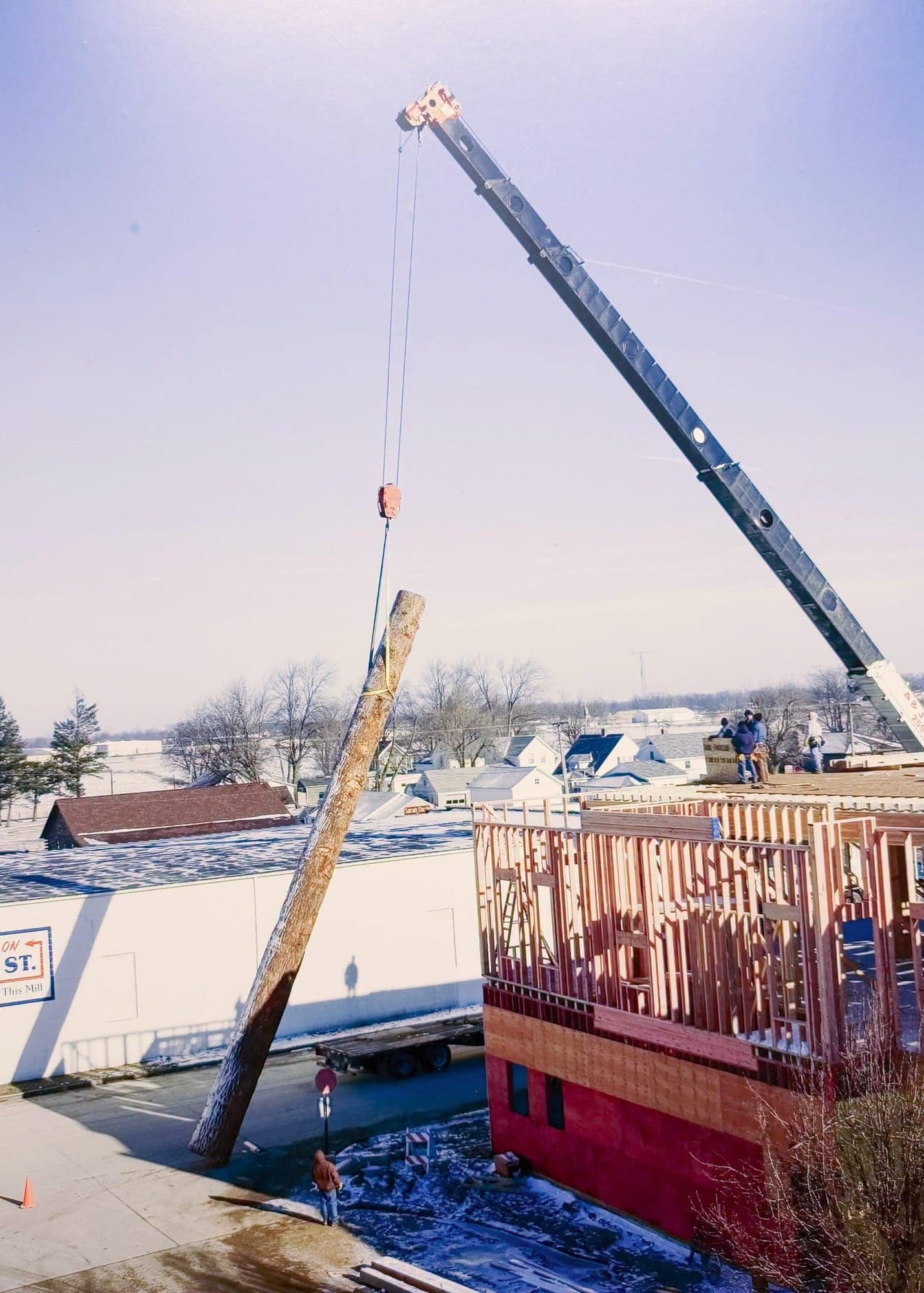
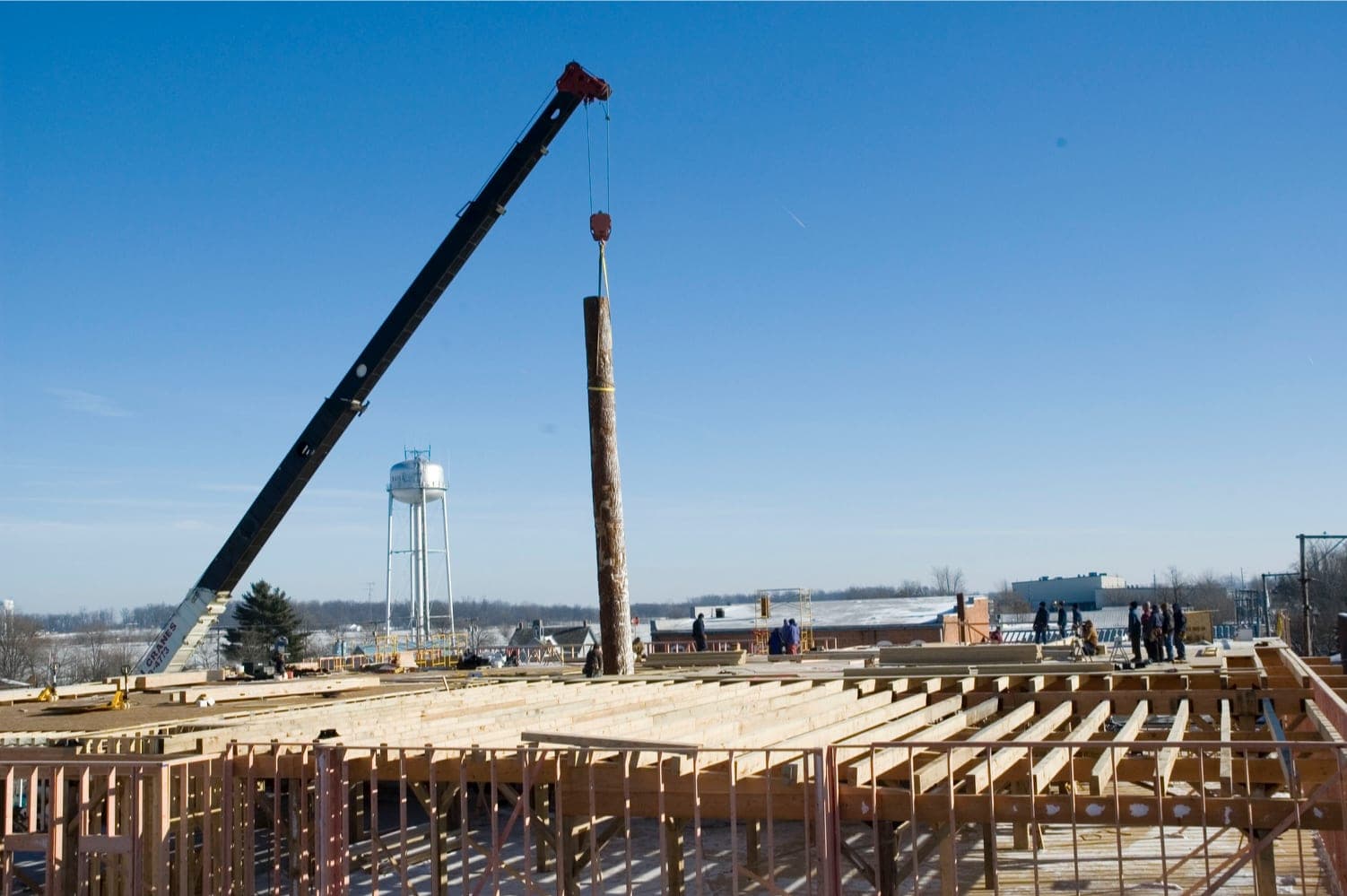
You do not cut a tree that size down and drag it out of the woods. You attach it to a helicopter first, then cut it, then lift it up over the tree line and carry it out. It came from Kin Basket Lake in British Columbia.
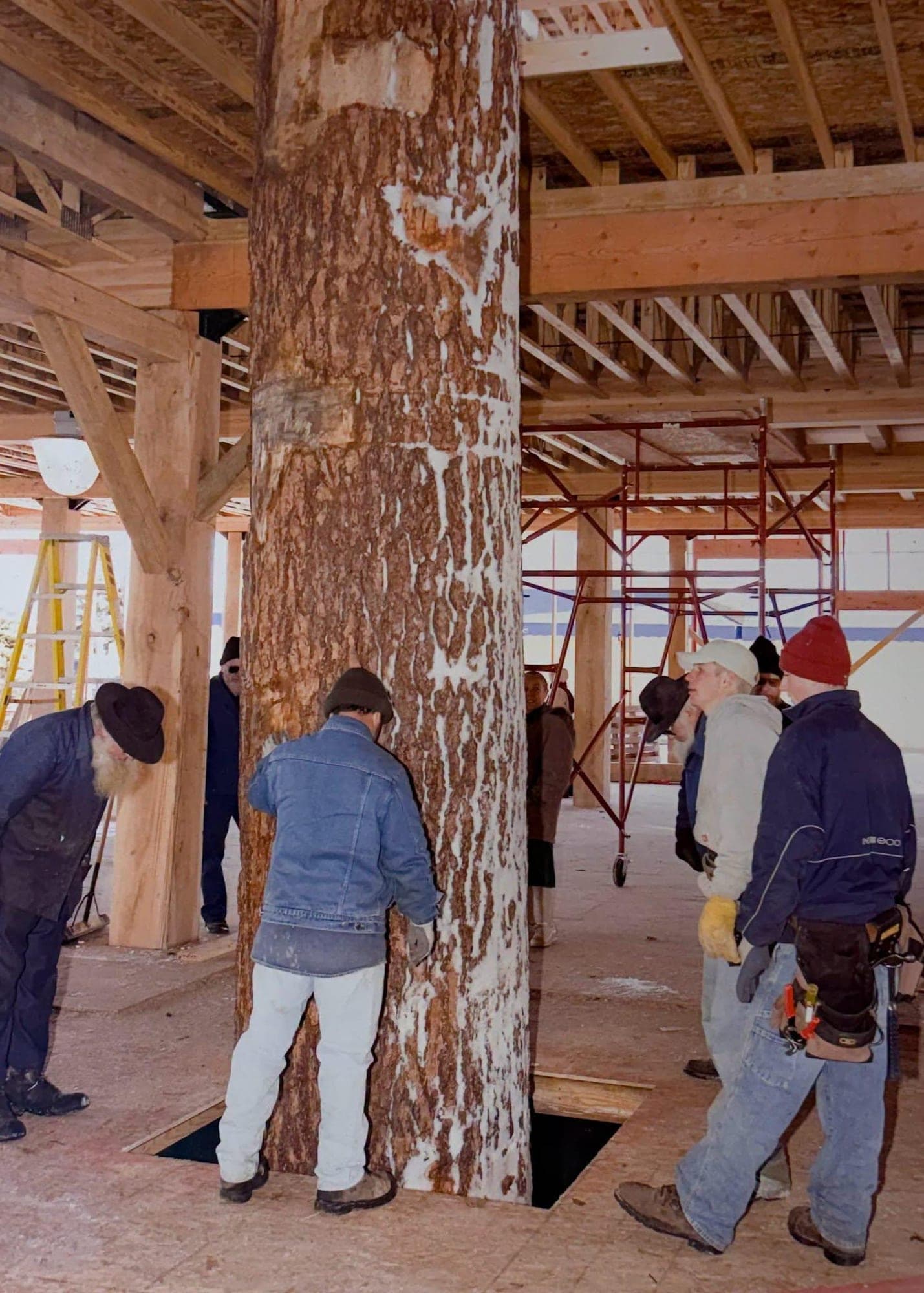
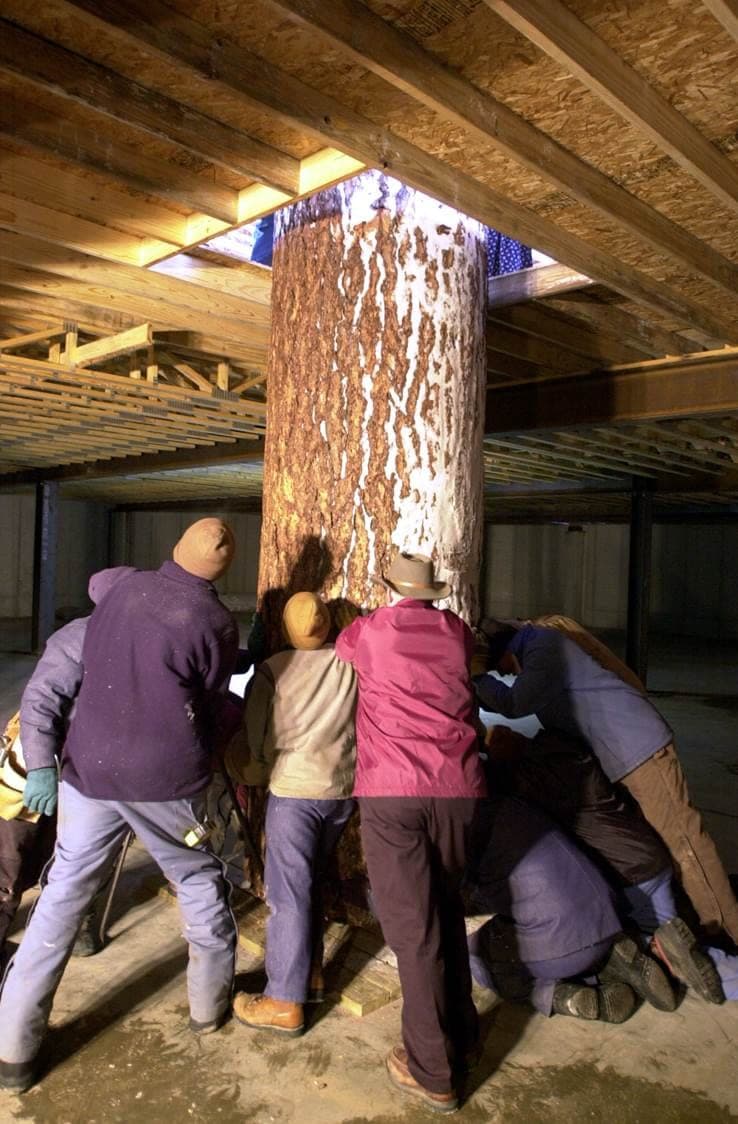
It is a Douglas fir. It stands in the middle of the building with the staircase wrapped around it, and people ask about it constantly. The usual question is whether it is holding up the building.
It is not. It is not holding up anything. It is a tree in a building, and that is the entire point.
Stop by, get a pretzel, and give the Douglas fir a hug. Just do not lean on it. It might fall over.
He has been around a long time. We hope you enjoy him.
A place to sit down
Alvin has a rule about this. If you want to welcome people, you give them a place to sit down. There are benches nearly everywhere in this building, and that is not decoration, it is the whole idea.
There are two elevators, one on each side, and every floor is reachable, the carousel included. Before the fire, about eighty percent of visitors took an elevator. After the rebuild, with a three hundred and seventy year old tree standing in the middle of the staircase, that dropped to twenty five percent.
People started taking the stairs on purpose.
The man looking for a candle
A while after the new building opened, Alvin was up on the third floor and got to talking with a visitor.
The man told him he had loved the old Mercantile, that coming back to Shipshewana without it had not been the same, and that he had told his friends he was not even going to go in the new one. Then somebody mentioned that the candle he was looking for was in the Davis Mercantile. So he went in, expecting to be disappointed.
Alvin ran into him four hours later.
Today
Twenty stores across four floors. More than two million people come through in a year. There is a mural of angel wings on the wall that Alvin and Elsie’s granddaughter Mariah painted with one of her cousins.
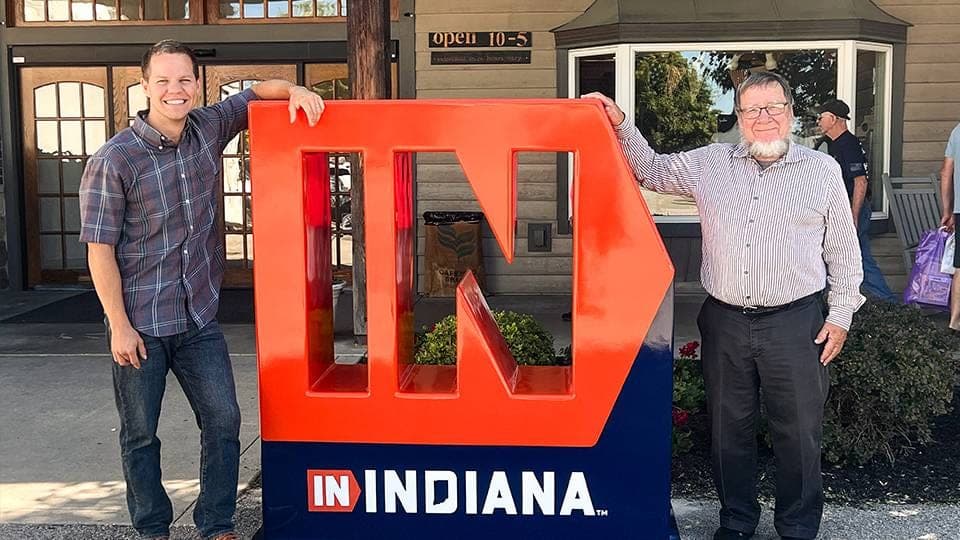
In 2025, Alvin and Elsie were given the Will Koch Indiana Tourism Leadership Award.
The hotel was built in 1891 for people passing through who needed somewhere to stop. Different building now, mostly. Same idea.